Reordering My Priorities: My Path After 30

Reading time: 9 minutes
On my 30th birthday, I sat in my prewar apartment in Chicago's Lincoln Park and felt a strange emptiness. My career was going well, I had friends, but something felt deeply wrong. I had spent the last few years meeting other people's expectations without ever asking what I actually want. It was right at that point that I began completely reordering my priorities.
Your thirties are a turning point for many women. According to a 2023 study by the Swiss Federal Statistical Office, 68 percent of Swiss women between 30 and 35 say they fundamentally rethought their life goals during this phase. I was definitely one of them.
The moment of self-reflection
It was a Tuesday evening in March 2023. I was sitting in a café on the Chicago River, waiting for a date with a man I had met through MySugardaddy. 52 years old, entrepreneur, worldly. While I waited for him, I scrolled through my notes app and came across a list from five years earlier: career goals, travel plans, relationship wishes. Almost none of it matched what I wanted today.
That realization hit me hard. How could I have lived for so long without regularly checking whether my path was even still mine? The personal growth everyone talked about hadn't happened for me. I had simply kept walking without pausing.
Recognizing and breaking old patterns
In the weeks that followed, I began to rethink my values. I made a list of everything I spent time and energy on. The result was sobering. 50 hours a week for a job that didn't fulfill me. 10 hours on social media. 3 hours of exercise. And frighteningly little for the people and activities that really mattered to me.
According to the consulting firm PwC, working people in Switzerland put an average of 42.5 hours a week into their jobs. For me it was significantly more, and it didn't make me any happier. I had to understand how I could reset my priorities in life.
What really matters
I started asking myself three questions that changed everything. First: what would I do if money didn't matter? Second: who do I want to spend my time with? Third: which version of myself do I want to be in five years?
The answers were surprisingly clear. I wanted to spend more time with people who inspire me. I wanted a relationship with a man who is emotionally mature and knows what he wants. And I wanted to finally start the photography project I had been putting off for years.
How I reset my priorities in life
The theoretical part was easy. Putting it into practice was the real challenge. I developed a system that helped me stay consistent. Every Sunday evening, I sat down for 30 minutes and planned the week around my new priorities.
- Priority 1: Relationships with people who move me forward and enrich me emotionally
- Priority 2: Creative projects that spark my passion
- Priority 3: Health and physical well-being
- Priority 4: Professional development, but without burning myself out
- Priority 5: Financial stability for real freedom
This order was radically different from before. Previously, career came first and everything else came after. Now I had understood that a fulfilling life takes more than professional success.
Dating with new priorities
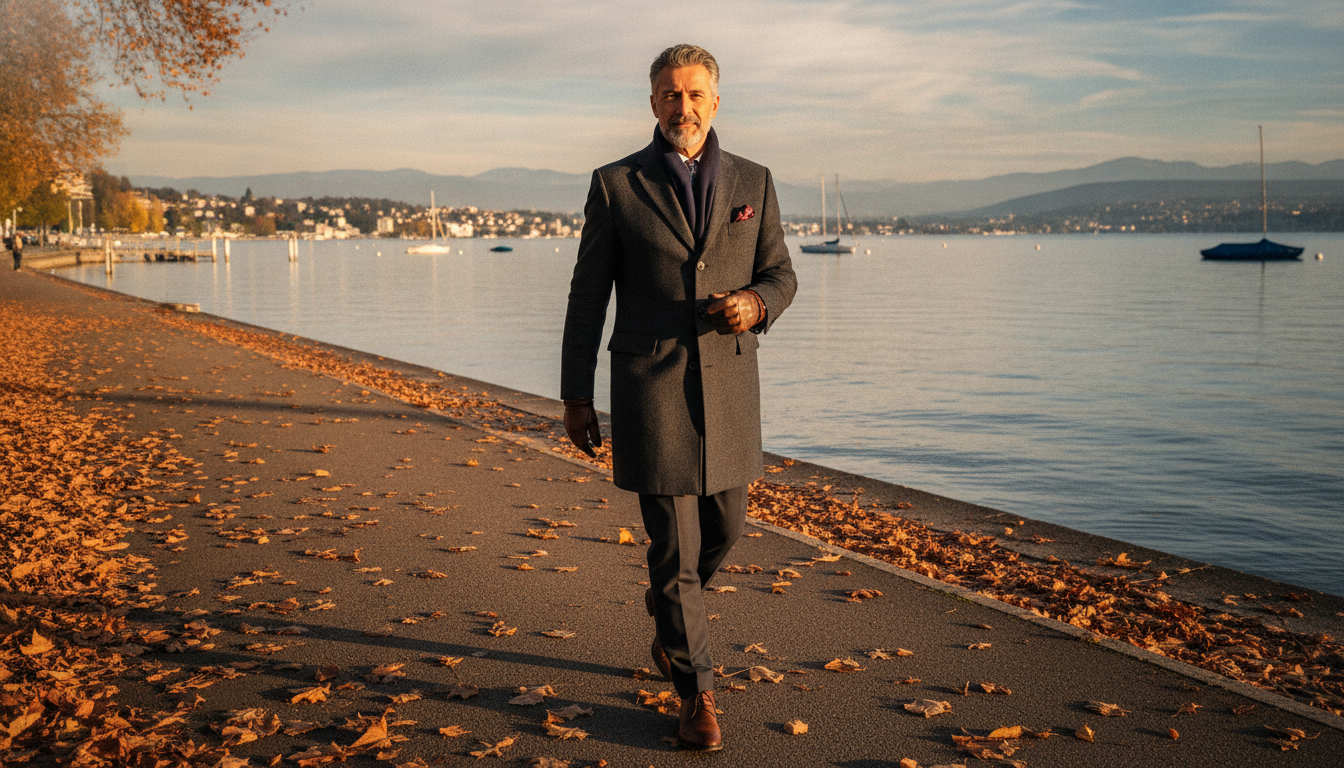
The reorientation completely changed my attitude toward dating as well. I had always looked for men who fit a certain mold. Young, successful, good-looking. After the self-reflection and reorientation of my thirties, it became clear to me that I was actually looking for something very different.
Maturity, emotional stability, life experience. Qualities I rarely found in younger men. The date with the 52-year-old entrepreneur became an eye-opener. He listened, asked thoughtful questions and had a calm I missed in men my own age. I also describe this experience in my article on the happiness of being with an older partner.
What I discovered in mature men
At 30, I learned that age gaps in relationships often offer underrated advantages. Older men have usually already sorted out their priorities. They know what they want and don't waste time on games. A 2024 study by the University of Zurich shows that relationships with an age gap of 10 to 15 years have an above-average satisfaction rate of 74 percent.
I started searching more deliberately on platforms like MySugardaddy, where I found men who shared similar values. These were no longer superficial contacts but deep conversations about life goals, values and plans for the future.
Redefining personal values after 30
The biggest change was that I stopped comparing myself to others. Instagram showed me perfect lives, perfect relationships, perfect careers every day. I deleted the app for three months and gained back 8 hours a week as a result. I invested that time in my photography project and in real get-togethers with friends.
According to a 2024 survey by Statista Germany, users between 25 and 34 spend an average of 2.5 hours a day on social media. That's over 17 hours a week that could be used elsewhere. For me, this digital detox was a key moment.
The power of saying no
Setting priorities also means turning things down. I learned to say no to events that didn't really interest me. No to projects that only stroked my ego but brought no real fulfillment. No to people who only took but never gave.
In July 2024, I got a job offer with 15 percent more pay, but also 20 percent more working hours. In the past, I would have said yes immediately. Now I worked out what mattered more to me: money, or time for the people and projects close to my heart. I turned it down and felt liberated.
Rethinking financial priorities
That doesn't mean money became unimportant. Quite the opposite. I recognized that financial freedom was the foundation for my other priorities. But I now pursued it more strategically. Instead of working more, I invested in further education and built passive income streams. An online photography course brought me an extra $850 a month starting in August 2024.
Relationships as the top priority
The most important realization was that relationships should come first. Not career, not money, not the perfect body. People who understand, support and challenge you are the most valuable thing in life.
I started deliberately scheduling time for deep conversations. Every other Saturday, I met my best friend Danielle for brunch at our favorite café. We talked about everything: fears, dreams, dating disasters. These get-togethers became a fixed anchor in my life.
My focus in dating changed too. I no longer looked for the perfect partner on paper but for someone I could be authentic with. Communication in a relationship with an age gap turned out to be surprisingly easy because both sides knew what they wanted.
Rethinking priorities at 30: the process

This change didn't happen overnight. It was a process of almost a year, and it's still ongoing. I kept a journal in which I noted three things every day: What fulfilled me today? Where did I waste time? What do I want to do differently tomorrow?
After six months, I saw clear patterns. Fulfillment almost always came from moments with people who mattered to me, or from creative work. Waste came from social media, pointless meetings and dates where I knew over the first coffee that it wasn't a fit.
Frequently asked questions about reorienting after 30
How do I find out what my true priorities are?
Imagine you only have five years left to live. What would you do? Who would you spend your time with? This question sounds dramatic, but it cuts through all the superficial answers. Write down your spontaneous thoughts without censoring them. This list shows you what really matters. I did this exercise in April 2023 and immediately realized that I was investing far too much time in things that didn't even appear on that list.
Is it normal to completely change your priorities at 30?
Yes, absolutely. Psychologists talk about the quarter-life crisis that many go through between 28 and 32. According to the Swiss Health Observatory Obsan, 61 percent of 30- to 35-year-olds say they reassessed their life goals during this phase. So you're in good company. This phase isn't a crisis but an opportunity for conscious realignment. You can find more on this in my post on a fresh start instead of a crisis.
How do I set priorities without coming across as selfish?
Setting priorities isn't selfish, it's necessary. You can only be there for others when you're balanced yourself. Communicate your needs clearly and respectfully. I told my friends openly that I would do fewer spontaneous dinners but plan fixed monthly dates where I'm fully present. Real friends understand and respect that. The others sort themselves out.
What do I do if my new priorities don't fit my job?
That's a difficult but important question. You don't have to quit right away, but you should make a plan. I started building skills that made me more independent. After nine months, I had enough clients to cut my working hours to 80 percent. I invested the 20 percent I gained in my photography business. Small steps lead to big changes if you stay consistent.
How do I stick with my new priorities when everyday life gets stressful?
Systems help more than motivation. I block fixed times for my priorities in my calendar, just like work meetings. Monday 7 to 9 p.m. is photography time. Saturday 10 a.m. to noon is brunch with Danielle. These appointments are untouchable. I also check every month whether my time investment still matches my values. A spreadsheet with weekly hours per category makes this very transparent.
My life a year later
In March 2024, a year after my realization at the café on the river, I sat at the same table again. This time with a man I had met three months earlier. 48 years old, architect, emotionally present. We talked about our next trip to Portugal and his latest project.
From the outside, my life may not have looked spectacularly different. But from the inside, it felt completely new. I worked less, earned about the same, but had a much better quality of life. My photography project was online and bringing in its first income. My relationships had become deeper and more real.
The most important thing was this: for the first time in a long while, I felt like myself again. Not like the version others expected of me, but like Michelle, who knows what she wants and has the courage to live accordingly.
Conclusion: setting priorities is an act of self-love
Reordering your priorities after 30 isn't a crisis but a sign of maturity. It means you're finally being honest with yourself and finding the courage to shape your life around your own values. Your thirties are the perfect time for it, because you have enough experience to know what works but still enough time to take a new path.
Start today with a simple exercise: write down what you spent your time on last week. Then write down what you want to spend it on. The difference shows you where to start. And if you notice that superficial dates with men your own age no longer fulfill you, try something new. Sometimes happiness lies exactly where you didn't expect it.